
Meet Miranda
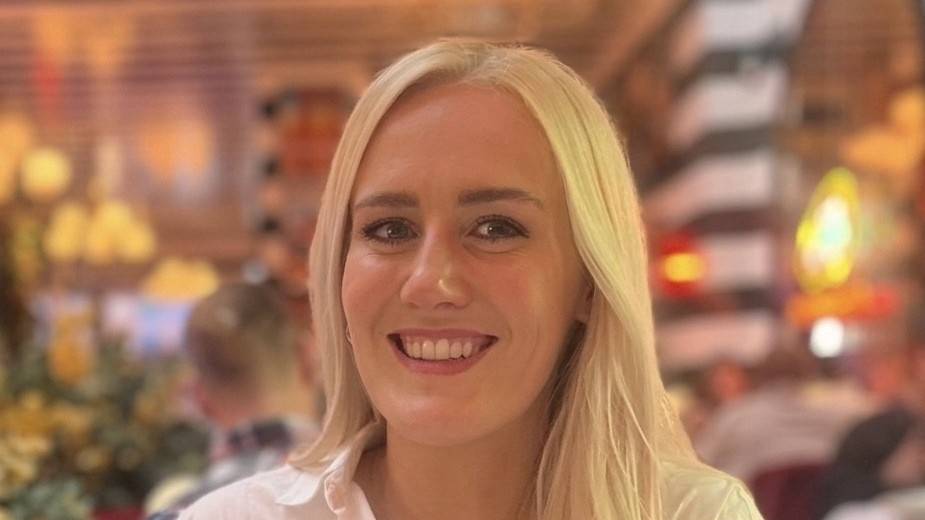
My name is Miranda; I am now 31 years old, and I live near the Peak District, with my husband and our labrador. I’m quite an active person and have tried not to let this fall away too much since my diagnosis. I enjoy Badminton, Tennis, Yoga and Pilates, as well as a lot of dog-walking. I’ve found that these routines and hobbies have grounded me throughout everything, although I do have to listen to my body in respect of treatment and side effects. Throughout most of my twenties I trained as and then worked as a lawyer, before making a big career-change into academia to teach law to postgraduate students. Whilst this was a big and exciting move, the timing was about as bad as it could have been, as my diagnosis, which came very much out of the blue, was only 6 months into my new role. Since my diagnosis, I’ve been writing an A-Z style guide about navigating cancer as a younger person, and I’m trying to write the kind of thing that I would have found really helpful.
I was diagnosed with cervical cancer at 29 years old, nearly two years ago. The type I have is not picked up by HPV cervical screening, which is something I think a lot of people do not realise is possible. My main symptom was abnormal bleeding, which ultimately led to an emergency hospital admission after losing around a litre of blood. By the time I was diagnosed, the cancer was at stage 3C1, and it came as a huge shock. The treatment I have received has been very extensive. I’ve had external beam radiotherapy, brachytherapy, three different types of chemotherapy, two different types of immunotherapy, and a very complex surgery that required a stay in intensive care. I now receive ongoing immunotherapy to keep my immune system in a heightened and activated state, with the aim of reducing the risk of recurrence. It’s been a huge amount to go through, but I am ultimately grateful for these treatment options and try to see myself as “getting to” have these treatments, rather than “having to” have them. Some of the treatments I’ve received have been very novel and pioneering, and I feel incredibly fortunate to have had these opportunities. Being diagnosed with cancer as a young person is a strange and disorienting experience. In many ways it feels like an oxymoron. On one hand I have never felt more closely connected to people than since being diagnosed with cancer. Yet on the other hand, I’ve also never felt so isolated and alone. You can go through a full spectrum of emotional response in the space of an hour: devastated, jealous, angry, hopeless, and then out of the blue – belly laughing with a friend, joyful and totally optimistic; all within the same afternoon. Others are moving through life and achieving certain life milestones whilst it can feel like time stands still for you.
I was told about the Ella Dawson Foundation through a contact who thought it would be a good fit for me, and she was right. I was looking for support, and somewhere that understands specifically what it is like to be a young person going through this. I didn’t know it at the time, but I needed a place to process everything that had happened, in a way that wasn’t purely clinical, or hospital based.
When the Ella Dawson Foundation first contacted me, I felt immediately understood. There is a warmth and understanding to the team that I think, sadly, only comes from lived experience, and I find it genuinely admirable that they have chosen to channel that into something that helps others, as it has made a huge difference for me and my family.
Through the Foundation I have accessed emotional support, practical advice, and peer support. The peer support side has probably surprised me the most in terms of how much it has meant to me. Before this, every person I knew who had cancer was older than me, and that was reflected in the hospital environment too. It left me feeling very isolated, and as if I had been extraordinarily unlucky in a way that was almost unique to me.
Meeting other young people through the Foundation changed that. I have met some wonderful people at the Annual Charity Ball, on the Lived Experience Panel, and through the Ella Dawson Book Club. Everyone I’ve met is so friendly and understanding. In a strange but good way, this helped to normalise my own experience and feel like less of an anomaly or statistic, and it has dismantled some of the subconscious ideas I had been carrying about what cancer looked like.
The support has helped me to shift some of the meaning I associate with cancer. For a long time, cancer meant hospitals and bad news and very little else. Now it means other things too, including new friendships, the annual Charity Ball, the Book Club, and specialised Oncology Personal Training with a rehab focus. It has helped me to live well with and beyond cancer, whatever this might look like on a week-by-week basis. Some weeks with my Personal Trainer we have made grand plans about training for a half marathon, whereas others I am suffering with side-effects, and we do a slow and conscious stretching and light session. Previously I would have been tempted to just throw the towel in all together, but I now realise that it’s important to just do what you can on a day-by-day basis. Something else that has taken time to work through is the guilt and shame that can come with a diagnosis. On one level – a rational and logical level – I knew and understood that I had not caused any of this, and yet, on another irrational level I still found myself carrying blame and shame that I had absolutely no business in carrying. Seeing the pain and hurt that cancer causes to others can be really hard to sit with, but I know that it is ultimately cancer which has caused this, not me. Being around others in a similar situation has helped me to come to terms with this, and to stop being so self-critical. I feel more able to accept the advice that I would give to one of my peers in the same situation and not unfairly place any guilt or blame on myself.
If I could say one thing to another young person going through cancer, it would be this: you have not caused any of this. Cancer has caused it. It might sometimes feel as though you are at the centre of everything that is happening, but actually cancer is the centre, and – just like your friends and family – you are just having to live around it to the best of your ability, and it takes a huge amount of strength and resilience. The Ella Dawson Foundation is exceptional in helping you to do exactly this, and you don’t have to face it all on your own. I was nearly 30 when I was diagnosed, and still I feel like the extra support has been invaluable, and I’m so glad I discovered the Foundation when I did.